Swapping Gems, Setting Up Cascades
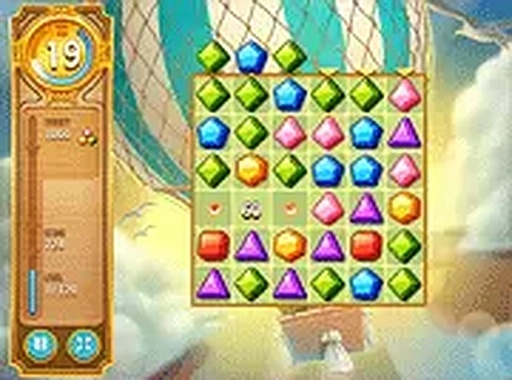
Jewel Journey is a match-3 puzzle game where the board is your only workspace. You select a diamond and swap it with an adjacent one. If the swap creates a line of three or more identical gems, those gems clear and the board shifts. The real decision is not the first match but what the board looks like after it settles. A swap that clears three gems and drops a fourth into place can trigger a chain you did not directly plan, and those cascades are where large scores come from.
Reading Level Objectives
Levels are not interchangeable. Some ask you to reach a target score within a limited number of moves; others ask you to clear specific gems from the board. That distinction changes how you play. A score target rewards big, multi-gem clears and cascade chains. A clear-the-gems objective rewards precision, because you may need to work a particular color or region of the board rather than chase the highest single match. Checking the objective before your first move is the difference between playing with a plan and reacting to whatever the board offers.
Bonuses, Power-Ups, and Escalation
Matching more than three diamonds is usually worth more than the extra gem itself. Larger matches tend to produce special bonuses, and as you advance, power-ups become available that can clear wider areas or reshape the board. These tools matter most when a level objective is nearly complete but the remaining gems are awkwardly placed. Spending a power-up early often wastes it; saving it for the moment when the board stalls is the better habit. Difficulty rises as you progress, so the value of recognizing a setup before you commit to a swap grows with every level.
Playing Anywhere, Without Installing
Jewel Journey runs directly in a browser on both mobile and desktop, so there is no download or installation step. On a phone or tablet you tap to select and swap; on a computer you use the mouse. A full-screen mode is available if you want fewer distractions. The game is free to play and built to be picked up in short sessions or played for longer stretches, which suits the match-3 format: a single level takes little time, but the pattern recognition you build carries over.










Comments
0 comments