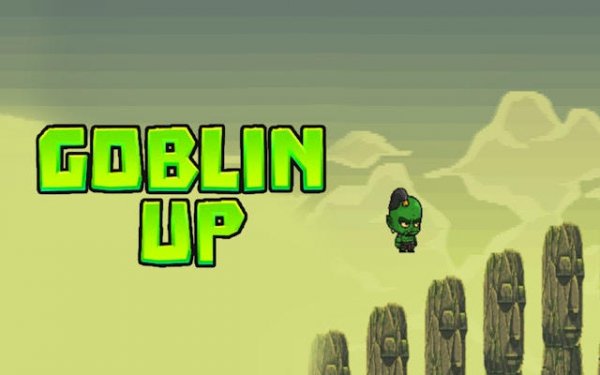
Two Jumps, One Goal
Goblin Leap strips platforming down to a single decision: how far do you need to go? Tapping or clicking the left side of the character triggers a short hop, while the right side produces a longer leap. That binary choice is the entire control scheme, and it is what makes the game instantly playable on a mouse or touchscreen. There is no run button, no attack, and no inventory. You read the distance to the next platform, pick the appropriate jump, and commit.
Reading the Course
Early levels keep gaps generous and platforms wide, so the short jump is often enough. As you progress, the layouts tighten. Moving platforms shift the landing spot while you are already airborne. Narrower pathways leave less room for error. The challenge is not memorizing a sequence but judging distance and timing in the moment, which is why the game rewards quick assessment over rote repetition. [IMG_1]
Difficulty That Scales With You
The game uses ability-based progression: levels become more complex as your timing improves, not on a fixed timer. This keeps the difficulty curve gradual enough for casual players while still pressuring experienced ones. Because each stage introduces a new arrangement of platforms and obstacles rather than a new mechanic, the learning stays focused on jump selection and rhythm.
Short Sessions, Steady Improvement
Goblin Leap is built for brief play. A single level takes seconds, and the lack of complex systems means you can stop and resume without losing momentum. The colorful visuals and smooth animations keep the tone light, but the real draw is reflex improvement: regular practice visibly sharpens your ability to pick the right jump under pressure.







Comments
0 comments