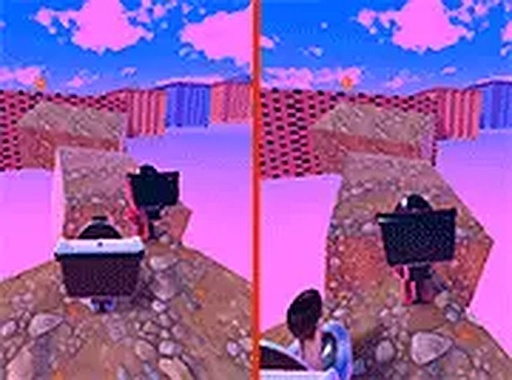
Head-to-Head Leap Mechanics
Two Player Platform Leap pits two competitors against each other on a single keyboard. One player typically uses the W key, the other the Up Arrow key, and each controls a character that can only jump. Both start on the same platform, and the match revolves around collecting yellow point tokens scattered across a series of moving platforms. The player with the most points when the session ends wins. The rules take seconds to grasp, which makes the game immediately playable for anyone who can press a key.
Reading Moving Platforms
Platforms shift position at different speeds and directions, so every jump requires timing rather than constant motion. A mistimed leap drops a character and costs valuable seconds that the opponent can use to grab tokens. As play progresses, platform layouts may change, forcing players to reassess their route instead of memorizing a single pattern. That variability keeps rounds from feeling identical and rewards players who stay alert to the current arrangement.
Visual Style and Feedback
The game uses a bright, cartoon-like look with colorful characters and platforms. The clean interface leaves nothing between the player and the action, while animations for token collection give clear feedback that progress is being made. The overall tone is lighthearted and non-intimidating, which suits short casual sessions and family play.
Controls and Accessibility
Each player uses one key to jump, with no menus or button combinations to learn. The game runs entirely in a desktop web browser, so no download, installation, or account is required. That low barrier makes it easy to start a quick match during a break or before a longer gaming session. Inputs translate directly to on-screen jumps with no noticeable delay.
Balancing Risk and Patience
Simple controls do not mean simple decisions. Checking the opponent's score can push a player toward calculated risks or a more conservative route. Rushing usually leads to falls, so patience and precise timing tend to produce better results than constant jumping. Regular play builds a feel for platform movement and improves hand-eye coordination, and experienced players learn to anticipate shifts and plan jumps before platforms move.








Comments
0 comments