Sorting a Shuffled Deck
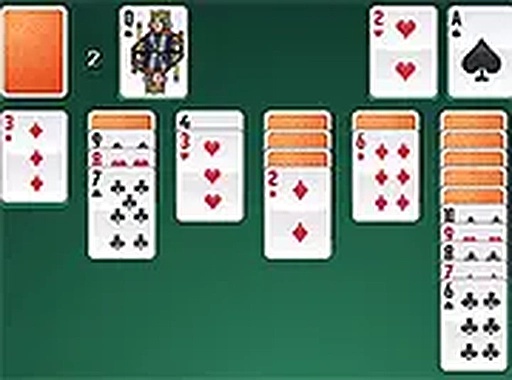
Patience Card Game Solitaire begins with a familiar setup: 52 playing cards shuffled and dealt into seven tableau columns. Only the top card of each column is face up, so the first task is to expose hidden cards by moving the visible ones. The goal is to assemble four foundation piles, each containing a single suit ordered from lowest to highest value. Cards move between columns in descending order while alternating colors — a red six can sit on a black seven, for example. Completed sequences transfer directly to the foundations. The game ends when every card reaches its correct stack.
Draw One or Draw Three
Before dealing, you choose how the stock pile behaves. Drawing one card at a time gives you more control and a better chance to use each card as it appears. Drawing three cards at once raises the difficulty because some useful cards may pass by before you can act on them. The undo button lets you reverse moves without penalty, so you can test a rearrangement and back out if it blocks future options. This makes experimentation part of the strategy rather than a risk.
Planning Beyond the Next Move
Success depends less on luck than on reading the tableau several moves ahead. Uncovering face-down cards early tends to open more paths and improves your odds of finishing. The key skill is telling the difference between a move that creates new opportunities and one that merely shuffles cards around. Because each deal produces a unique arrangement, you adapt your approach every time rather than memorizing a fixed solution.
A Minimal, Accessible Interface
The interface stays out of the way. Cards are clearly displayed, the layout adapts from phones to desktop monitors, and a full-screen mode is available for a cleaner view. No registration, download, or installation is required — the game loads directly in a web browser. That makes it easy to fit in a short break or a longer, focused session. There are no timers or pressure, so you can proceed at your own pace.







Comments
0 comments