Track Design and Setting
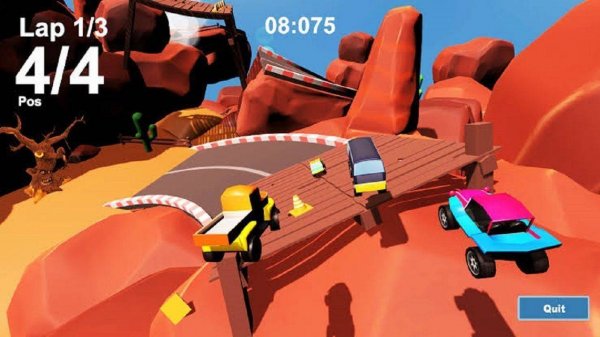
Each course in Alpine Compact Dash runs through elevated terrain marked by tight bends and elevation changes. Roads shift in width and curvature, so the line that works on one stretch may not suit the next. The visual style favors bright, open landscapes rather than dense urban clutter, which keeps navigation readable and supports the relaxed pace. Because corners arrive quickly and the road narrows unpredictably, learning a track's shape matters more than raw speed on the first attempt.
[IMG_1]Handling and Feedback
The car responds quickly to steering input, with a light feel intended for narrow roads. Acceleration and braking follow arcade conventions, so small mistakes rarely end a run. Visual cues and a speed indicator show how your choices affect momentum, helping you connect a late brake or a sharp turn to the time you lose. That feedback loop suits cautious beginners and players chasing faster laps alike.
Competition Modes
Two modes define play. Time Trial sets you against the clock, with personal bests as the benchmark on every track. The second mode places you against computer-controlled vehicles that follow set paths. These AI drivers offer consistent, beatable targets, which encourages repeated attempts to improve position. There is no online multiplayer, so the focus stays on individual skill development rather than live competition.
[IMG_2]Mastering the Circuits
Success comes from learning each track's rhythm. Smooth steering through corners preserves speed better than sharp turns, and braking before a curve rather than during it keeps the car under control. In Time Trial, consistent lap times often beat risky all-out efforts. Against AI opponents, watching their movement patterns reveals safe passing zones. Regular practice builds familiarity with road layouts and sharpens reaction times.
Progression and Unlockables
Completing races and setting faster times can make new tracks available. The game tracks performance metrics such as lap records and race results, giving clear goals without complex menus or upgrade systems. The unlock structure is straightforward, rewarding persistence with additional content to explore.






Comments
0 comments