Momentum-Based Swinging
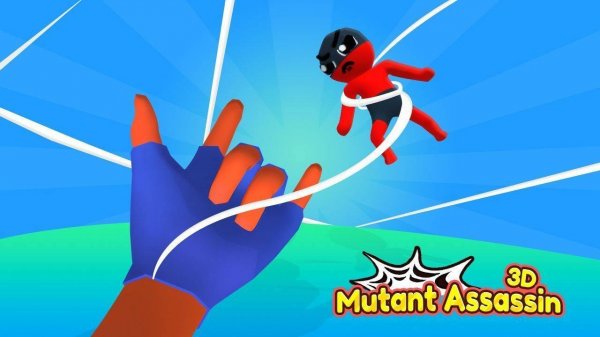
Movement in Rope Hero 3D Adventure depends on a single tool: a rope. You aim it, release it, and ride the resulting arc. The game treats each swing as a physics problem. Where you attach the rope, when you let go, and how much speed you carry into the next swing all determine whether you land cleanly or drop into a hazard. Because the rope obeys momentum, you cannot simply point at a distant platform and expect to arrive. You have to build speed across two or three swings, or approach from a different angle. This turns every gap into a small routing decision.
Capturing Enemies at Range
Enemies appear throughout each stage, and the rope doubles as a capture tool. You can snag a foe from a distance, then close in for a short-range attack to remove the threat. Groups are the real test. Rushing a cluster usually means getting surrounded, so the smarter play is to isolate one enemy with the rope, finish it, and reposition before the others react. The environment often offers multiple angles on the same group, which means you can pick off stragglers from above, from behind cover, or from a higher platform. The game rewards patience and spatial awareness over raw aggression.
Stage Layouts and Difficulty Curve
Each stage has a distinct layout with its own terrain features, obstacle placement, and enemy positions. Early areas give you wide platforms and forgiving swing distances, letting you learn the rope without constant failure. Later stages tighten the geometry, add hazards near landing zones, and place enemies where a careless swing leaves you exposed. The final stage combines everything the game has taught you: precise aiming, momentum management, and target prioritization under pressure. Progression feels like a steady accumulation of skill rather than a sudden spike.
Visual Clarity and Controls
The 3D presentation is clean and colorful, with clear indicators for platforms and enemy positions. That clarity matters because the game depends on judging distance and timing. Simple mouse or touch inputs handle aiming and swinging, so new players can start quickly, while experienced players can refine their technique. The learning curve is gentle enough to avoid frustration, and the responsive controls support short, pick-up-and-play sessions.









Comments
0 comments