The Core Block-Building Loop
Every course in Block Track Creator Puzzle hands you the same basic task: walk a character along a fixed path, pick up colored blocks placed around the route, and spend those blocks to reshape the environment. Gaps in the path need a bridge; raised ledges need a staircase. The puzzle isn't just about finding blocks — it's about deciding which obstacles deserve your limited supply and in what order to solve them. Because the path itself is predetermined, the real freedom sits in how you allocate resources, not where you walk.
How Difficulty Ramps Up
Early stages keep things simple. You collect a few blocks, build one obvious bridge, and finish. As you move forward, layouts introduce more complex arrangements, and some courses include moving elements or multiple routes that force you to weigh one approach against another. The difficulty curve stays gentle, so new obstacle types appear before the game asks you to combine them under pressure. There is no fail state and no forced restart, which means a wrong block placement costs you time, not progress. That design choice turns each level into a low-stakes experiment rather than a test you can lose.
Visuals, Audio, and Tone
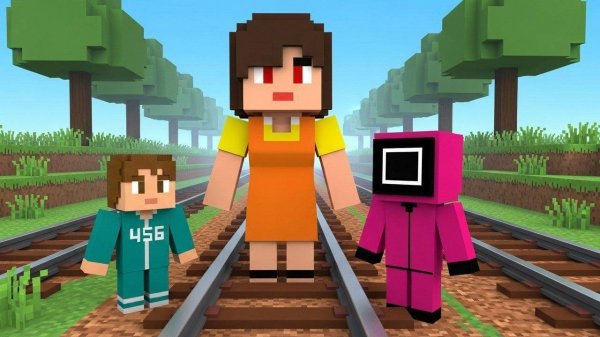
The game uses blocky, stylized graphics with a bright color palette that keeps every path, block, and obstacle easy to read at a glance. Character animations are smooth and expressive, giving the simple act of walking and building a bit of personality. Backgrounds shift between themes such as grassy fields, sandy beaches, and snowy hills, though all stay within the same friendly aesthetic. Upbeat music and clear audio cues for collecting blocks or completing structures round out a presentation that stays out of the way of the puzzle.
Session Length and Who It Suits
Levels are designed to be finished in a few minutes, making the game comfortable for short breaks or longer stretches. With no timers, no violence, and no competitive pressure, it works well for younger players still developing fine motor skills and spatial reasoning, as well as adults who want a quiet logic exercise. Replay value comes from self-imposed goals: beating your own completion time or finding a more efficient building strategy. The lack of penalties encourages trying new tactics instead of repeating a safe solution.










Comments
0 comments