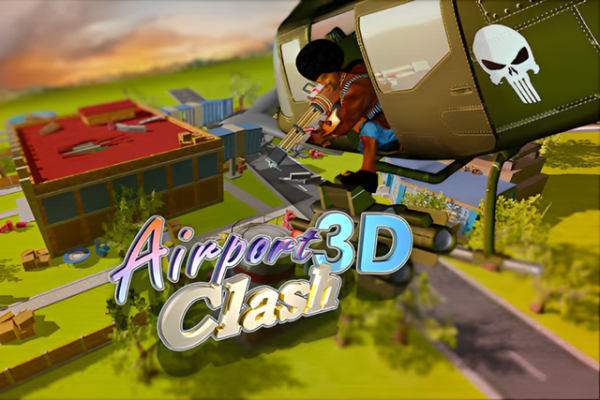
Competitive Objective and Team Dynamics
Airport Team Challenge 3D places two teams inside an abandoned airport where the primary goal is to finish with a higher score than the opposition before time expires. Points come from outmaneuvering rivals and completing team objectives, not from direct confrontation. That distinction shapes every decision: players who break formation to chase opponents often leave gaps their teammates must cover. Success depends on reading the other team's positioning and adjusting tactics as the match unfolds.
Movement, Controls, and Positioning
Characters move with standard WASD keys, jump with the spacebar, and aim or interact using the mouse. These simple inputs keep attention on spatial awareness rather than complex command chains. The airport layout—boxes, containers, and abandoned airplanes—provides cover and vertical options. Holding a higher position improves sightlines and complicates flanking attempts. Staying in motion reduces the chance of being caught off guard, but constant movement without a plan can separate players from their team.
Equipment Upgrades Between Rounds
After each round, players can invest in equipment upgrades that carry into future matches. This progression layer rewards consistent performance rather than one-off wins. A team that coordinates its upgrade choices can cover different roles more effectively than a group that upgrades randomly. Precision aiming and efficient movement become more valuable as gear improves, so practice and communication compound over time.
Reading the Environment
The abandoned airport is more than a backdrop. Its mix of open tarmac, tight corridors, and scattered obstacles forces teams to choose between speed and safety. Players who learn common approach routes can predict where opponents will appear and set up crossfires or retreats. Adaptability matters more than memorizing a single route, because the opposing team is making the same calculations.







Comments
0 comments