Rolling Combat Basics
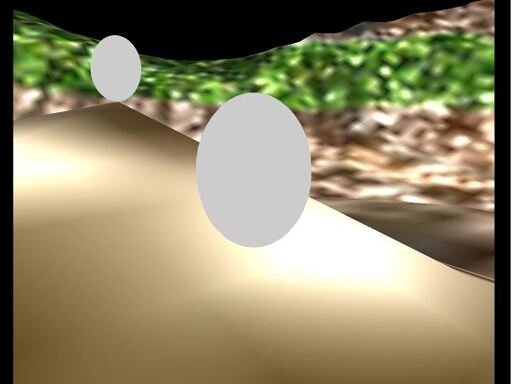
Each player commands a large sphere on an expansive open field. The core loop is simple: move strategically, line up a shot when another sphere enters range, and release projectiles to drain the opponent's energy. Because spheres are always in motion, hitting a target means reading its trajectory a moment before you fire. [IMG_1]
Timing, Aim, and Evasion
When two spheres meet, the exchange is quick. You must aim while also watching for incoming projectiles, then make sharp directional changes to slip out of the line of fire. Standing still turns you into an easy target, so constant movement is part of the defense. Success comes from balancing offense and defense rather than committing fully to either. [IMG_2]
Match Flow and Opponent Variety
Opponents behave unpredictably, so no two sessions play out the same way. Sessions can be short bursts or longer stretches, depending on how many players join and how skilled they are. The controls are intuitive enough that most people can start competing within moments, yet tactical movement keeps returning players engaged. [IMG_3]
Accessibility and Visual Clarity
The game avoids mature themes and keeps its visual style clean, so the action stays readable even when several spheres are firing at once. That clarity matters because tracking multiple projectiles is part of the challenge. The gentle learning curve makes it approachable for a wide age range, while the need to predict opponent behavior gives it staying power.










Comments
0 comments