Rider Control and Track Goal
In Motocross 2 Arcade Racing, your objective is to complete each side-scrolling course as fast as possible without crashing. You tap and hold the screen to accelerate, release to slow down or brake, and use device tilt or on-screen buttons to lean the rider forward or backward. That lean input matters most during jumps and landings, where the bike's angle determines whether you keep momentum or hit the dirt. Obstacles like rocks and other riders force you to read the terrain ahead and adjust your line early.
How the Physics Engine Shapes Every Jump
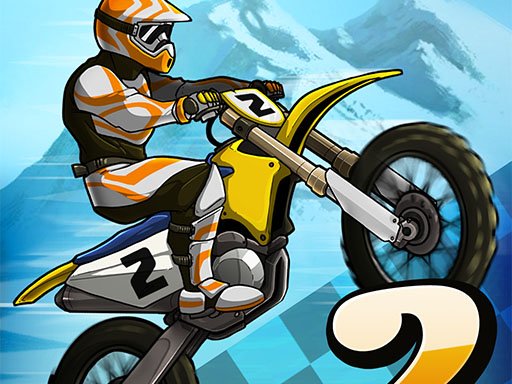
The realistic physics engine affects acceleration, braking, and airborne behavior. A steep climb demands speed carried from the approach, while a sharp turn punishes late braking. In the air, leaning forward or backward changes rotation, so timing the jump and landing is a skill you build rather than a button you press once. [IMG_1] This is why the same track can feel different depending on the bike you ride and how much speed you commit to each hill.
Progression Through Bikes and Upgrades
As you progress, you unlock faster bikes and upgrades that improve speed, handling, and suspension. Those upgrades change how the physics engine responds, so a bike tuned for acceleration may handle differently from one built for stability. The game includes a tutorial mode for new players learning the basic controls and mechanics. Competition comes from AI opponents or from challenging friends by beating their best times.
Reading Terrain and Managing Risk
Tracks grow more difficult, moving from steep climbs to sharp turns and tighter obstacle placement. Hitting a jump at the wrong angle costs time; clearing it cleanly can set up a faster section. Performing tricks during jumps may earn extra points, but the safer play is often to land balanced and keep speed. The bright graphics and engine sounds support the arcade feel, and the family-friendly content keeps the experience approachable for all skill levels.









Comments
0 comments