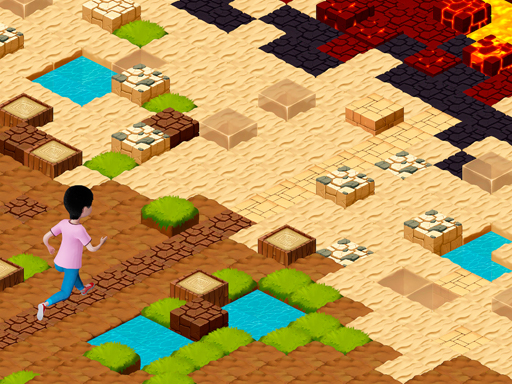
Core Sliding Mechanics
In Sliding Tim: Path Home, you control Tim's movement along a path using swipe or tap gestures. The primary action is lateral movement: swipe left or right to shift Tim's position. Speed management is equally important; when approaching hazardous terrain like mud or lava, you slow down by swiping in the opposite direction. The game's challenge lies in balancing steady progress with timely deceleration. Each obstacle demands a specific reaction, and mistiming a swipe can lead to slipping or falling, setting you back. The controls are simple to learn, but the precision required increases as you advance.
Obstacles and Terrain Variety
The path is segmented by distinct environmental hazards: muddy patches, hot desert sands, and streams of red-hot lava. Each type affects Tim differently. Mud likely reduces traction, desert sand may slow movement, and lava requires immediate avoidance. These obstacles are not randomly placed; they form patterns that you must recognize and adapt to. Because routes change with each attempt, you cannot rely on memorization alone. Instead, you develop a feel for when to maintain speed and when to brake. The visual design uses bright, friendly colors to keep the experience approachable for all ages.
Progression and Replay Value
Sliding Tim: Path Home is structured around repeated runs, each with unpredictable routes. This design encourages practice and patience. As you play, you learn to anticipate obstacle sequences and improve your reaction time. The difficulty curve is gradual; early runs introduce basic hazards, while later attempts combine them in more demanding ways. There are no violent or inappropriate elements, making it suitable for families. The sense of progress comes from successfully navigating longer distances and reaching home more consistently.










Comments
0 comments