Comparing Images Side by Side
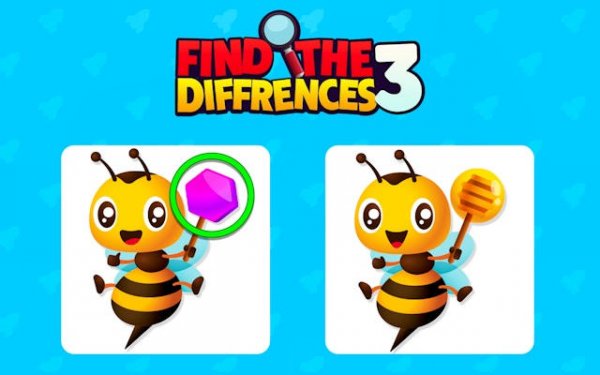
Each level of Spot the 3 Differences Puzzle places two versions of the same picture next to each other. Exactly three details differ between them, and the player's only job is to find and tap each one. A mark appears on screen once a difference is correctly identified, so progress is confirmed immediately rather than tallied at the end. Because the comparison happens within a single screen, the game keeps attention on the images instead of menus or timers. [IMG_1]
What the Differences Look Like
The variations are not random noise. They tend to sit in colors, shapes, edges, and the presence or absence of small objects. A shadow may fall differently, an item may be missing, or a hue may shift by a few degrees. This is why scanning section by section works better than staring at the whole picture at once. The game rewards methodical comparison, not fast clicking, and a wrong tap carries no penalty beyond the time spent on it.
Level Variety and Difficulty Curve
The puzzle set spans 80 levels with imagery that ranges from peaceful landscapes to detailed indoor scenes. Early stages tend to be readable at a glance, while later ones pack more visual information into each frame, which makes the three differences harder to isolate. That progression is the main source of challenge. There is no separate difficulty selector; the level order itself does the work of easing players in and then asking for sharper attention.
Pace, Audience, and Session Length
No time limit and no failure state shape how the game is played. A level can take thirty seconds or several minutes, and stopping mid-puzzle costs nothing. That structure suits short breaks as well as longer sessions, and it makes the game approachable for children and older players alike. The interface keeps the puzzle front and center, so no prior knowledge of puzzle conventions is needed to start. [IMG_2]










Comments
0 comments